|
Architecture
* Clean Power * Energy Master Planning *
Net Zero Energy
Austin, Texas
|
|
Architecture
* Clean Power * Energy Master Planning *
Net Zero Energy
Austin, Texas
|
Price Response
www.PriceResponse.com
What is Price Response?
Price Response and Price response programs operate based on voluntary actions of customers in response to economic signals. The differences between Price Response and Load Response programs are a matter of degree. The most pronounced difference is price response programs rely on wholesale clearing prices as a primary signal or method to reimburse customers for their participation, and are much more likely to be voluntary. Some load response programs have the same characteristics, but are skewed toward a command-and-control methodology.
CHP
Systems (Cogeneration
and Trigeneration)
Plants
Have Very High Efficiencies, Low Fuel Costs & Low Emissions
The Effective Heat Rate is Approximately
4100 btu/kW & System Efficiency is 92% Plant.
The CHP System
below is Rated at 900 kW and Features:
(2) Natural Gas Engines @ 450 kW each on one Skid with Optional
Selective Catalytic Reduction system that removes Nitrogen
Oxides to "non-detect."
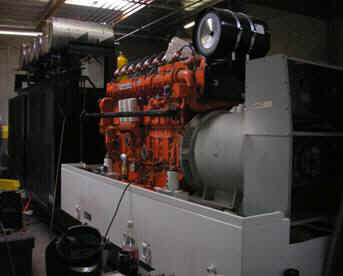
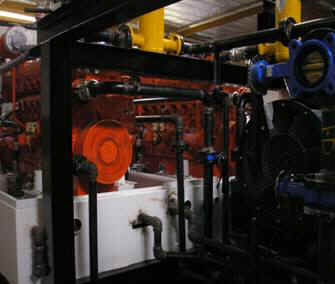
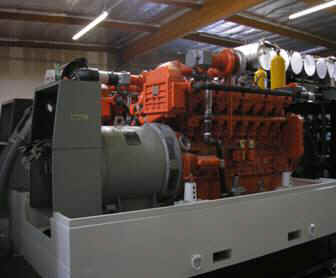
CHP Systems are one of the best economic and environmental solutions for your company's short-term & long-term sustainability as we "upgrade" natural gas to clean power with our clean power generation solutions. Our emissions abatement solutions reduce nitrogen oxides (NOx) to "non-detect" and can be installed and operated in most EPA non-attainment regions!
|
|


__________________________________________
______________________________________________
With Natural Gas at < $5.00/mmbtu, our Clean Power Generation plants generate power for about $0.04 / kWh (fuel cost). With operations & maintenance added, that's about 5.5 cents /kWh - or approximately 50% - 60% less than most electric rates.
Our CHP Systems and Dispersed Generation power plants are an ideal solution for electric utilities, data centers, electric co-ops, electrical sub-stations and hospitals. Our high-efficiency CHP Systems eliminate blackouts, electric grid supply problems and significantly reduce greenhouse gas emissions and hazardous air pollutants associated with electric power generation.
For qualified clients we will design, build, finance, own, operate & maintain a new:
energy
system, through a Power
Purchase Agreement that guarantees
a minimum 10% reduction in our client's energy expenses.
(NOTE: Engineering and related interim project development
expenses may be at client's expense but will be
refunded
at the close of Power
Purchase Agreement or other project financing. Some of our
engineering
and EPC services
may be provided by one of our Top-ranked ENR Engineering
Procurement Construction partner companies.)
To receive a preliminary no-obligation review of your energy, engineering or
project plans,
send an introductory email to us at the following email address:
More
About Price Response
Load response is a type of demand side management solution that commercial and industrial customers may choose to employ in response to wholesale electricity prices or other market incentives which can serve several important system-wide functions.
For example, retail customers can ease tight capacity situations and mitigate reliability concerns by reducing their electric power usage or consumption. By reducing consumption in response to price signals or other financial incentives, retail customers also can reduce peak wholesale electricity prices, mitigate price volatility, and reduce opportunities for market manipulation.
It is not necessary for all customers to participate in these emergency or economic load response programs; even the response of a small percentage of customers can produce significant benefits for the electric grid and its customers.
In order to participate in load response programs, customers need load response “tools” or solutions that can assist them in reducing their electric power usage at the appropriate times.
The two main categories of load response tools are communications devices and mechanisms for modifying a customer’s usage of electricity supplied by the grid during peak hours and conditions. Customers have two basic mechanisms for reducing their demand on the local electricity grid. They can simply reduce their electricity at key times through load response management, energy efficiency or energy conservation measures and improvements, or the customer can shift their source of electricity from the grid to on-site cogeneration or trigeneration power and energy systems thereby reducing their use of grid electricity but not their overall use of electricity.
Emergency load response can be implemented with readily available technology. For example, load response software can be installed in a building (e.g., an industrial facility, an office building, or commercial establishment, or even a home) that would connect to the outside world (signals sent by the Independent System Operator) with building control systems (e.g., thermostats, light dimmers). The building owner or operator could choose to respond to the signal or not. With currently available software, building operators could be notified through e-mail, cellular phone, and alpha-numeric paging of an expected reliability threat and could respond as simply as pressing a “yes” or “no” button included with the system. An affirmative answer would trigger predetermined changes to building systems (e.g., the lights could dim twenty percent, the AC thermostat could rise two degrees) for a set time.
Emergency load response to serve a reliability function is not new technology. For years, electric utilities and system operators have offered special rates to customers who were willing to curtail their load upon request from the utility or system operator to avert short-term reliability problems. On hot days when demand threatens to overwhelm the available capacity on the system, customers willing and able to lower the amount of electricity they draw from the grid offer a resource that can be tapped to delay or avoid the need for more drastic measures, including rolling brown-outs or rolling black-outs. Customers participating in load response programs don’t just avoid costs associated with consuming at high prices at peak periods; they can receive payments from “selling” the power they don’t use at market prices.
Simply put, the electricity that the customer decides not to use at peak times can be sold back into the energy market at peak prices.
What
is Load Leveling?
These technologies are used to smooth out the peaks and dips in energy demand
— by reducing consumption at peak times ("peak shaving"), increasing
it during off-peak times ("valley filling"), or shifting the load from
peak to off-peak periods — to maximize use of efficient baseload generation
and reduce the need for spinning reserves.
Load control:
Energy management control systems (EMCSs) can be used to switch electrical
equipment on or off for load leveling purposes. Some EMCSs enable direct
off-site control (by the utility) of user equipment. Typically applied to
heating, cooling, ventilation, and lighting loads, EMCSs can also be used to
invoke on-site generators, thereby reducing peak demand for grid electricity.
Energy storage devices located on the customer's side of the meter can be used
to shift the timing of energy consumption.
Issues Involving the Implementation Demand
Side Management
Solutions Include: Public
Benefits Programs, Rate Schedules, Time-of-Use Rates, Power Factor Charges, and
Real-Time-Pricing
Public Benefits Programs
Prior to electricity industry restructuring, utilities were responsible for a
variety of programs (including DSM) that meet social objectives. Under
restructuring, funding for these programs is typically through a small surcharge
("wires charge" or "system benefits charge") on utility
bills.
Rate Schedules
Utilities can structure their rates to encourage customers to modify their
pattern of energy use.
Time-of-Use Rates
Time-of-use
rates involve charging higher prices for peak electricity as a way to shift
demand to off-peak periods. Interruptible rates offer discounts in exchange for
a user commitment to reduce demand when requested by the utility.
Power Factor Charges
Power
factor charges can be implemented to discourage commercial and industrial
utility customers from partially loading their electrical equipment, as this
requires the utility to generate extra current to cover the resulting system
losses.
Real-Time Pricing
Real-time pricing is where the electricity price varies continuously (or hour by hour) based on the utility's load and the different types of power plants that have to be operated to satisfy that demand.
Advertise with us:
To see your ad here or request our ad rates, send email to: info@PriceResponse.com
Energy Investment Banking
Services
___________________________________________
www.EnergyInvestmentBanking.com
“spending
hundreds and hundreds and hundreds of billions of dollars every year for oil,
much of it from the Middle East, is just about the single stupidest thing that
modern society could possibly do. It’s very difficult to think of anything
more idiotic than that.”
~ R. James
Woolsey, Jr., former
Director of the CIA
|
Price of Addiction ### to Foreign Oil |


"Changing the Way the World Makes and Uses Energy" sm
Price
Response
www.PriceResponse.com
PriceResponse.com
Copyright
© 2007
All Rights Reserved